Introduction
There are several biblical terms that refer to the notion of knowledge. Among them are, notably, gnosis and epignosis. The Bible also uses the term sophia, which relates more to wisdom.
However, when it comes to knowing God, the Bible does not speak simply of accumulating information about Him. There is a knowledge that goes beyond the intellect, a knowledge that involves experience, participation and communion.
Jesus declares in John 17:3:
“Now this is eternal life: that they know you, the only true God, and Jesus Christ, whom you have sent.”
This knowledge is therefore not merely theoretical. It involves a real relationship with God, an experience of His presence and a participation in His life.
There is a knowledge based on what we have learned, but there is also a knowledge that leads us to live what we have learned.
The real question, then, is this: what knowledge of God truly allows us to experience God?
1. Two ways of knowing God
The apostle Paul writes in 2 Corinthians 5:16:
“So from now on we regard no one from a worldly point of view. Though we once regarded Christ in this way, we do so no longer.”
Here Paul presents two ways of knowing Christ: a knowledge according to the flesh and a knowledge that belongs to the Spirit.
These two forms of knowledge also produce two different experiences of God.
Knowledge according to the flesh
Knowing God according to the flesh means having information about God. This knowledge can be biblical, theological, religious or intellectual.
We can know the Scriptures, know Christian doctrines, listen to sermons, read books about God and know the story of Jesus without ever having personally experienced His presence.
So it is possible to talk about God without truly walking with God.
It is possible to pray to God without being truly in communion with Him.
It is even possible to have many years of Christian faith without having developed a true Christian life.
Intellectual knowledge of God is useful, but on its own it is not enough to make us experience the reality of God.
2. Knowledge that becomes experience
True knowledge of God involves more than information. It involves experience, participation and communion.
Knowing God means entering into a relationship with Him and experiencing His reality.
It is the difference between knowing that God exists and knowing God personally.
You can hear about God for years without ever having truly met Him.
We can read many books written by men and women who have experienced God. These books can strengthen our faith, encourage us and push us to seek God. But their experience can never automatically become our experience.
You can repeat what someone else has lived through, but you cannot live their encounter with God in their place.
You need your own encounter with God.
3. The example of Job: from “I had heard” to “my eyes have seen you”
The story of Job perfectly illustrates this transition.
Job declares:
“My ears had heard of you but now my eyes have seen you.”
Before his personal experience, Job knew God through what he had heard.
He feared God and had a reputation as a righteous man. Yet his knowledge of God was still largely based on what he had received and learned.
So there was a difference between having heard about God and having personally met God.
After his experience, Job could speak of God not only because he had been told about Him, but because he had himself experienced His reality.
This is why the Christian life cannot be founded solely on what we have heard.
Someone else's faith can inspire us, but it cannot replace our own relationship with God.
4. The Christian life is proportional to our personal knowledge of God
The Christian life will always be, to a certain extent, proportional to the personal knowledge we have of God.
When you read a book written by someone who has met God, you receive their testimony. You can be encouraged by their experience, but that experience must lead you to seek God yourself.
You can know the words of a man of God without knowing the God that man has met.
You can know a preacher's teachings without personally knowing the one he is talking about.
This is why personal knowledge of God is essential.
The Christian life is not something we simply try to produce by our own efforts. It becomes the natural consequence of a true knowledge of God.
The more we know God, the more our life, our prayer, our communion with Him and the way we manifest Him are transformed.
5. The new birth: entering God's sphere
The story of Nicodemus helps us understand another dimension of this reality.
Nicodemus was a religious, educated and respected man. Yet when he meets Jesus, Jesus tells him he must be born again.
Jesus explains that he must be “born from above.”
This statement reveals a fundamental truth: to enter God's spiritual reality, a change of nature is needed.
The kingdom of God is not simply a building, an institution or a physical place.
God is Spirit.
Therefore, communion with God must take place in the Spirit.
God's sphere is a spiritual reality. It is not accessible simply through a title, a religious position, years of Christian experience or an intellectual knowledge of the Bible.
Being a pastor, apostle, bishop or holding any religious title is not enough to automatically have deep intimacy with God.
A title does not determine how close we are to God.
What allows us to enter this reality is the new birth.
6. God's nature and communion with God
Everything that enters God's sphere must conform to God's nature.
This is why the new birth is so important.
When man fell, it was not simply a matter of losing a geographical location in the Garden of Eden. It was a break with the sphere of communion in which he met God.
This break explains why people can sometimes feel a spiritual distance from God.
This distance is not necessarily physical or emotional. It is above all spiritual.
When we are in communion with God, our relationship with Him becomes natural.
Take a simple picture: when a child knows his father is in a room of the house, he does not need to make any special effort to go into that room and talk to him.
In the same way, when we are in the sphere of communion with God, we do not need to artificially produce an encounter with Him.
The encounter becomes a natural consequence of our communion with Him.
7. God is not met only in one place
Some people think they have to go to a particular place to meet God.
They may think they have to go up a mountain, to a church or to a specific place to experience His presence.
But God is not limited to a place.
Jesus explains this to the Samaritan woman when she asks him what the true place of worship is.
Jesus answers that God is Spirit and that those who worship Him must worship in spirit and in truth.
God is therefore not the God of a building.
He is the God of spirits.
The church can be a place of gathering, teaching and fellowship, but God is not confined to a building.
He can be experienced in our home, in our car, on public transport, at work or anywhere we are in communion with Him.
8. Closing our eyes does not automatically mean entering the Spirit
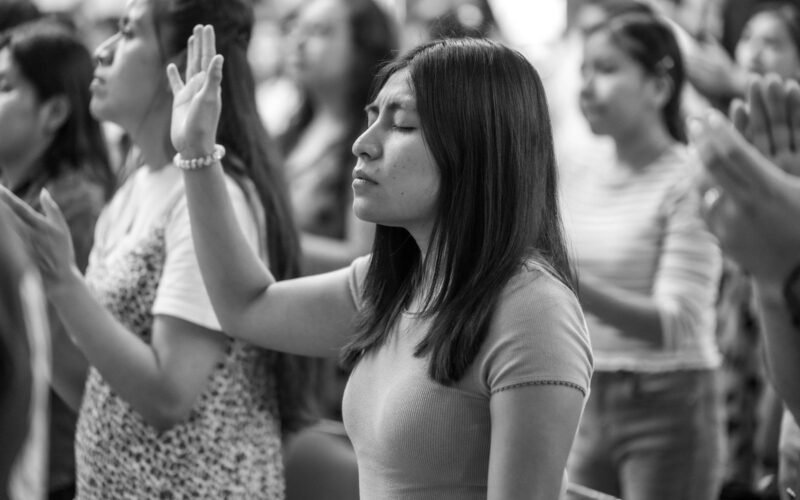
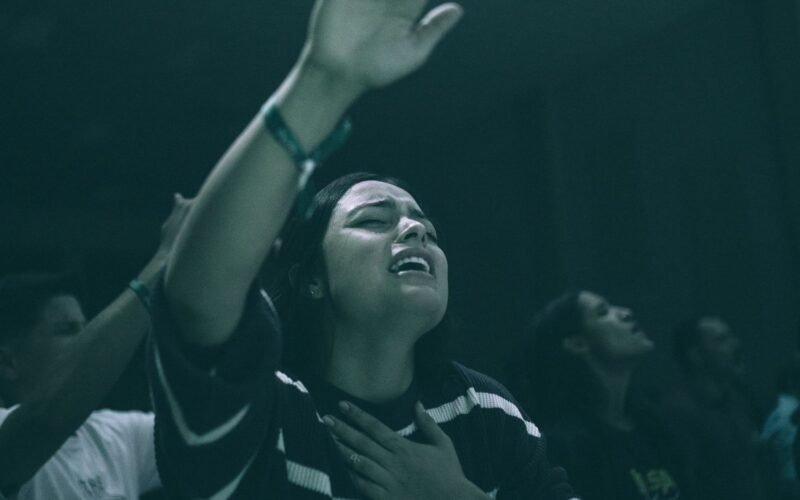
When we pray, we often have the habit of closing our eyes.
But closing our eyes does not automatically mean we are in the Spirit.
Sometimes we close our eyes simply to get away from visual distractions and focus better.
However, as our communion with God grows, our relationship with Him no longer necessarily depends on a particular environment.
We can be in a taxi and talk with God.
We can be in our car and experience His presence.
We can do our shopping and be in communion with Him.
We can walk, work and live while remaining aware of His presence.
The goal, then, is not only to have an isolated moment of prayer, but to develop a life of communion with God.
9. The different levels of experiencing God
The first epistle of John presents several levels of experience.
John writes:
“That which was from the beginning, which we have heard, which we have seen with our eyes, which we have looked at and our hands have touched—this we proclaim concerning the Word of life.”
Notice the progression:
We have heard.
Hearing about God is a first form of knowledge.
But hearing about God does not yet mean having experienced Him.
Then:
We have seen.
There is a dimension where the reality of God becomes personal.
Next:
We have beheld.
To behold goes beyond a mere outward perception. It is an inner revelation, a deep understanding of the person of Christ.
Finally:
We have touched.
John speaks of a real, tangible experience, of a reality that has become personal.
He then affirms that this life that was manifested to them has become their own experience, and that they proclaim it so that others too may enter into this communion.
10. Intellectual knowledge is not enough
There is a danger when we confuse what we hear with what we truly know.
We can go to church for years, listen to sermons every week, know many verses and accumulate a great deal of biblical information without ever experiencing the life of God.
Intellectual knowledge can enable us to speak correctly about God, but it does not automatically produce the character of God in us.
It does not necessarily enable us to overcome sin, the “self” and the influences of the world.
Paul reminds us that the letter kills, but the Spirit gives life.
So it is possible to know the Bible without deeply knowing the Author of the Bible.
This is why biblical knowledge must lead us to an encounter with God, and not become a mere accumulation of information.
11. Seeking God personally
Our experience of God does not happen by chance.
We must seek Him.
It is not enough to feed solely on what others tell us about God.
Sermons, teachings, books and testimonies must push us to seek God personally.
Everything we receive from others should become an invitation to develop our own relationship with God.
Your pastor can tell you about God, but he cannot have your relationship with God in your place.
A preacher can show you the way, but he cannot walk it for you.
You must seek God yourself.
You must develop your own communion with Him.
You must experience His presence.
You must learn to recognize His voice and walk according to His nature.
Conclusion: what knowledge of God do we have?
The real question is therefore not simply:
“Do I know things about God?”
The question is:
“Do I know God?”
There is a knowledge of God based on what we have heard, learned and studied.
But there is also a knowledge that becomes a personal experience, a communion and a walk with God.
God is a reality we can know, experience and walk with.
Our goal must not simply be to become people who know a lot about God.
We must become people who know God.
For eternal life is not simply an accumulation of religious knowledge. It consists of knowing the only true God and Jesus Christ whom He sent.
So ask yourself this question:
What level of knowing God am I at today?
Do I know God because I have heard about Him?
Do I know Him only through other people's experiences?
Or am I developing a true communion with Him?
God wants to lead us from hearing to experience, from information to revelation, from religion to relationship, and from intellectual knowledge to a true walk with Him.
So let us seek God personally. Let us learn to know Him. Let us experience His presence. And let us walk with Him.